NOFACE3D:
Noise-Scheduled Focused Anchoring for Controlled Enhancement for 3D Generation
Local geometry and texture refinement with a frozen 3D generator.
TL;DR A training-free method that sharpens the geometry and texture of a selected region of an image-to-3D asset while preserving the rest, and also enables localized 3D editing.

NOFACE3D enlarges and refines a selected region of an existing mesh, conditioned on the corresponding image crop.
Abstract
Recent image-to-3D models generate complete, high-quality assets from a single image, with global shape and appearance that are already convincing; what remains is the fine scale, where small, thin, elongated, or detail-rich regions are reconstructed softly and under-resolved. This gap can arise in generators with fixed-resolution spatial grids: the same spatial sampling density is used for a large, smooth, low-curvature surface and for a thin, high-curvature structure that carries most of the perceived detail. To this end, we introduce NOFACE3D, a training-free framework that refines these detail-critical regions while preserving the rest of the asset. Given a generated mesh, its input image, and a refinement box, NOFACE3D extracts the selected submesh, scales it up to fill the generator’s input volume, and re-encodes it into the full-resolution latent grid. Conditioned on the image crop, it refines the region through flow-based sampling with a spatially varying noise schedule that anchors boundary latents. The refined region is then integrated back into the original asset, preserving the surrounding geometry and appearance. We implement NOFACE3D on TRELLIS.2 and its sparse voxel representation; all of it operates purely at inference time on the frozen pretrained generator. We evaluate NOFACE3D on PAniC-3D, TexVerse and BIGDETAIL, a new benchmark of 339 assets with annotated detail-critical regions. On all three, it generates sharper geometry and finer texture detail than the baselines.
Method
The selected region fills the generator’s spatial grid. A spatial noise schedule anchors the boundary during refinement.
Select a region
Select a region in the mesh and conditioning image.
Enlarge & re-encode
Scale the submesh to fill the generator’s spatial grid and re-encode it.
Refine with anchoring
Anchor boundary latents and allow stronger changes toward the interior.
Reintegrate
Transform the refined region back and combine it with the original asset.

Figure 2 · Overview of NOFACE3D. Given an asset generated by an off-the-shelf image-to-3D model and a user-marked region, NOFACE3D scales the region up to fill the generator’s input volume and re-encodes it into the full-resolution latent grid. A boundary-distance field assigns each token a release level τ: tokens near attachment boundaries stay anchored, and tokens farther away are regenerated more strongly. Geometry and texture are then resampled with spatially varying SDEdit, and unreleased tokens are re-anchored to the base asset at every step. Finally, the refined mesh replaces the base faces inside the crop box.
3D comparisons
Compare TRELLIS.2 and NOFACE3D on seventeen examples: BIGDETAIL objects, characters, and TexVerse objects.
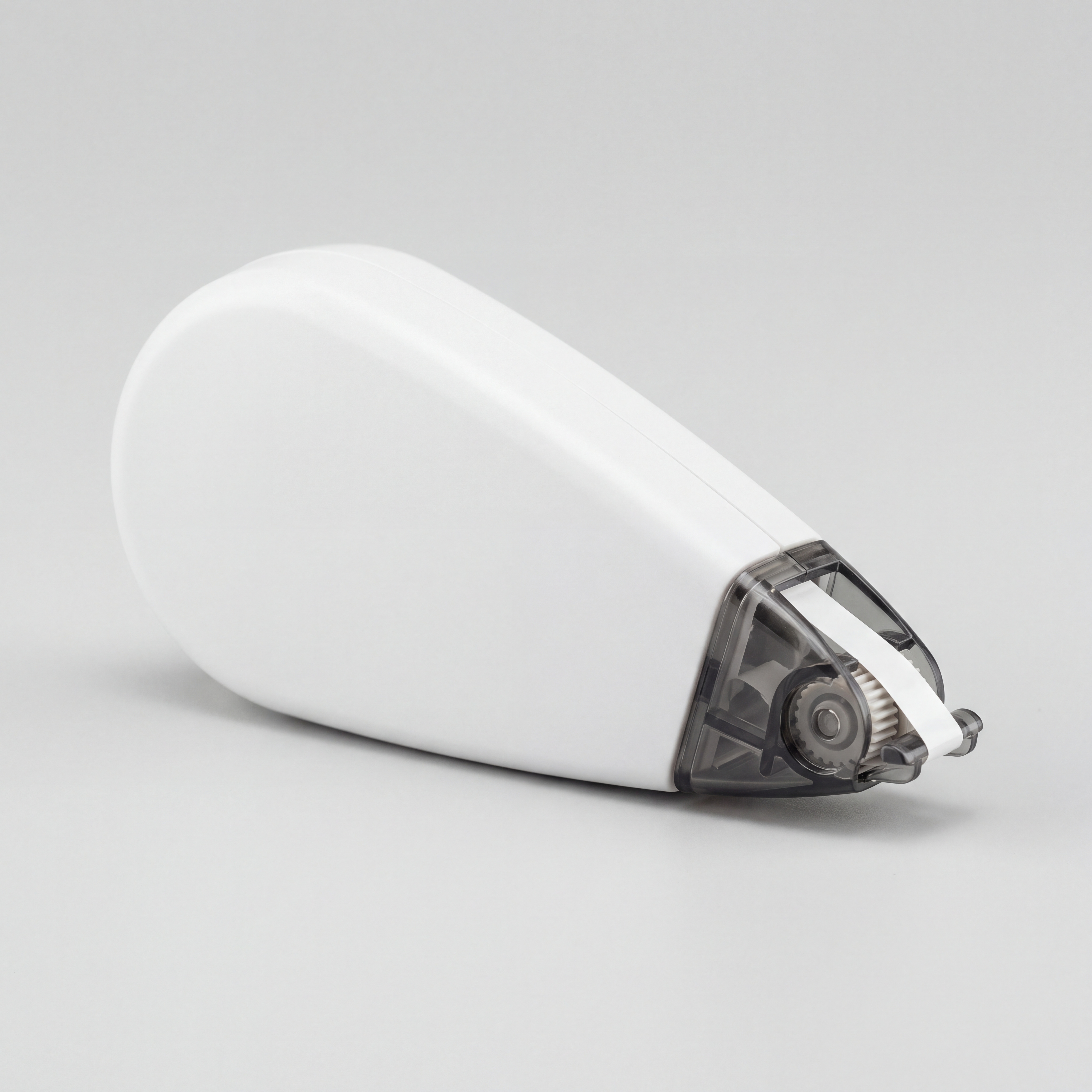
Correction tape dispenser
1 / 8Simplified previews. Use Full quality to inspect the original geometry and textures.
Drag to orbit · right-drag to pan · + / − or Alt+scroll to zoom · cameras always linked
Scroll to explore the 3D comparison

The webpage includes seventeen interactive comparisons across BIGDETAIL, characters, and TexVerse. This printed preview shows the paper comparison figure.
Boundary anchoring ablation
Compare refinement with and without noise scheduling using linked cameras.
Yun Jin
1 / 2Drag to orbit · right-drag to pan · + / − or Alt+scroll to zoom · cameras always linked
Scroll to load the comparison
Sequential editing
Edited conditioning crops guide local changes to the mesh. These examples apply two edits in sequence.
Wings → head refinement
1 / 2Drag to orbit · right-drag to pan · + / − or Alt+scroll to zoom · all three cameras linked
Scroll to load the sequence
Evaluation
Human preference
Preference among ratings excluding “neither”; 73.3% across all responses.
PAniC-3D assets
Assets evaluated against their TRELLIS.2 baselines.
BIGDETAIL assets
Refined assets with annotated detail-critical regions in images and meshes.
Study details and metrics
Human study: 16 reviewers, 200 PAniC-3D assets, 1,188 responses. 12.0% of responses were “neither.” Of judged ratings, 12.2% preferred TRELLIS.2 and 4.5% were ties.
| Metric | TRELLIS.2 | NOFACE3D |
|---|---|---|
| FID ↓ | 13.97 | 7.43 |
| DINO similarity ↑ | 0.812 | 0.830 |
| Chamfer × 100 ↓ | 3.359 | 3.370 |
See the paper for evaluation protocols, additional baselines, and uncertainty estimates.
Read the full evaluation ↗BIGDETAIL benchmark
339 refined assets with image crops and 3D region annotations for small structures such as mechanisms, fittings, and connectors.
99 randomly sampled conditioning images.
Printed labels and lettering may remain distorted after refinement.
Paper and resources
Method code and the full BIGDETAIL dataset are planned for release.